Maximizing QCS Life Cycle While Securing ROI
Quality has become an industry standard in paper production. Mills are expected to deliver consistent product quality while facing increasing pressure on production costs, raw materials, energy and overall profitability. In an uncertain market, cost competitiveness is important, and getting the most from existing machines and equipment can be vital to maintaining a competitive operation.
This puts more focus on what existing Quality Control Systems can deliver. A QCS can remain in operation for decades, but maintaining its capabilities throughout that life cycle requires more than simply keeping the system running. Actuators wear, valves begin to stick, measurement and control performance can change, while production requirements continue to develop.
When performance starts to decline, replacing the entire QCS is not necessarily the most effective solution. The more important question is where performance is being lost and where targeted modernization can deliver the greatest technical and economic benefit.
Accurate measurement, reliable actuators and correctly tuned controls are the foundation for stable profile control. When one part of that chain begins to deteriorate, targeted rebuilds and retrofits can restore performance while preserving the parts of the existing system that continue to work reliably. This allows mills to get more from existing assets while directing investment to areas where it can create measurable value.
At Tasowheel, this means looking at the complete control chain and identifying where modernization can improve quality, production efficiency and cost competitiveness. The technical scope of an upgrade is only part of the equation. How modernization is executed also has a direct impact on how quickly the expected benefits can be achieved.
Our experience in QCS rebuilds and startups helps identify potential problems before they affect commissioning, align mechanics, actuators, controls and process conditions, and respond when actual site conditions differ from the plan. This reduces the risk of unstable first-run performance, extended commissioning and rework, all of which can delay the expected return on investment.
The result is a different way of looking at QCS modernization. Instead of replacing equipment simply because it has reached a certain age, the focus is on restoring performance, extending the useful life of existing assets and directing investment where it produces measurable value.
The following two Tasowheel cases show this in practice. One focuses on restoring CD basis-weight control through a BM32 dilution system rebuild in South Korea, while the other uses a steambox retrofit on Satia PM1 in India to improve CD moisture control and drying performance.
Case 1:Headbox rebuild in South Korea
At BM32 in South Korea, a three-layer carton board machine, the middle layer is equipped with a dilution headbox. The machine produces Duplex and FBB grades from 220 to 550 g/m².
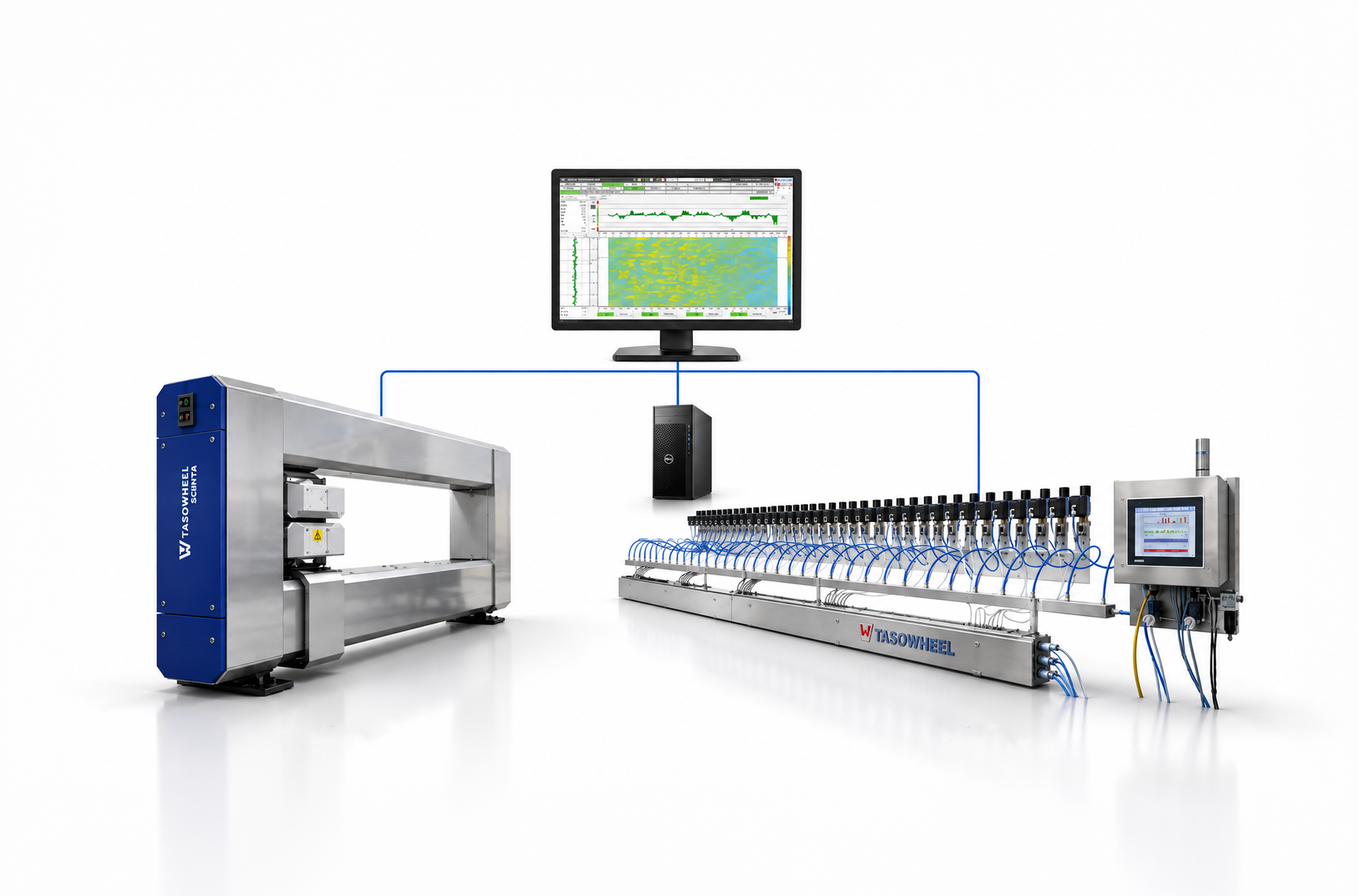
The existing dilution system was affected by legacy actuator wear and drift, worn and sticking dilution valves, limited response and inaccurate control across the sheet width. The objective of the rebuild was to restore reliable CD basis weight control.
The modernization followed a structured sequence including survey and diagnosis, mechanical rebuild, control tuning and verification. Replacing the worn components was only part of the work. We combined the precision of the new components with tuning the CD control to the actual operating conditions, fine-tuning to remove residual profile bias and verification before handover. This combination of mechanical precision and control know-how also enabled an extremely short startup time.
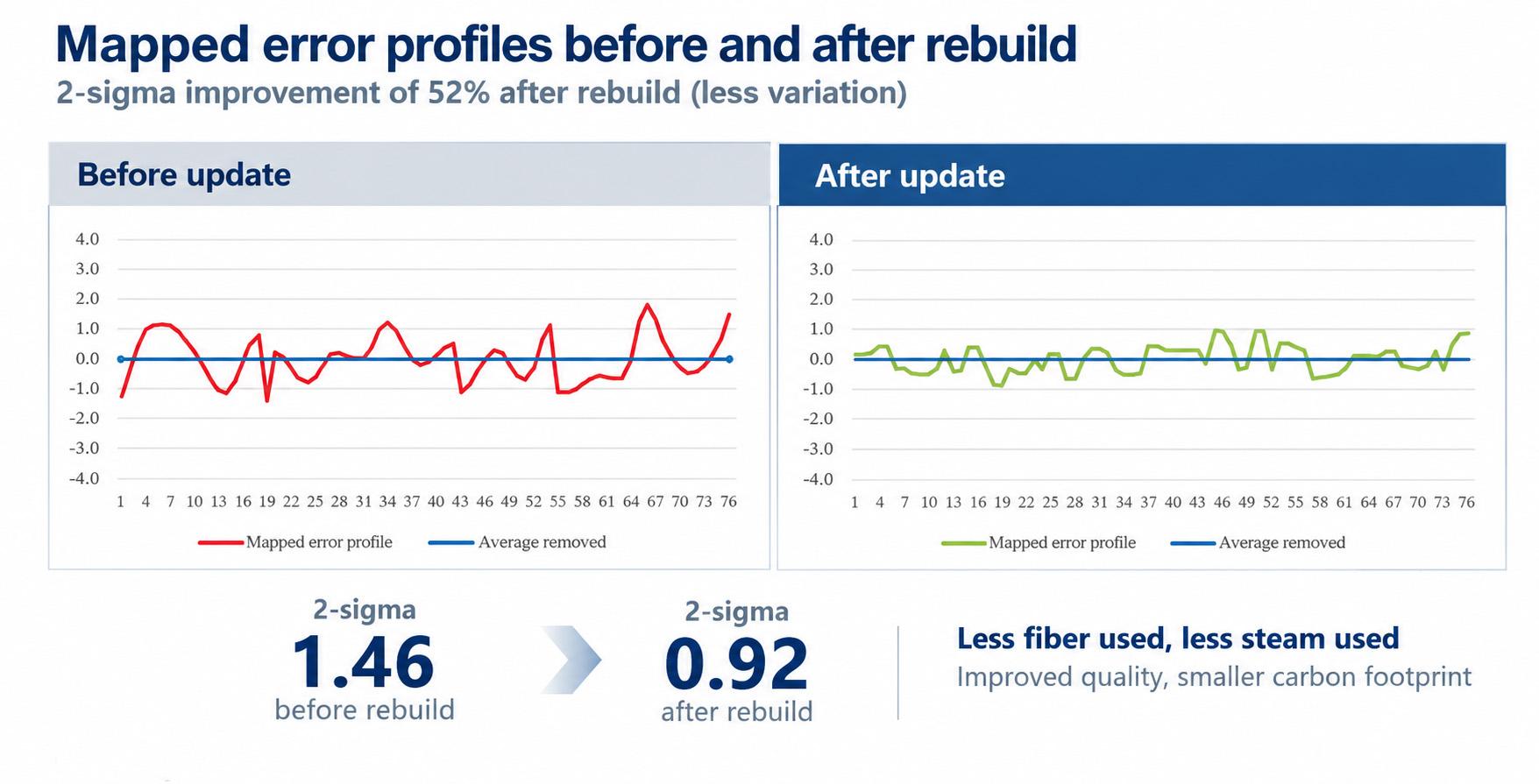
Following the rebuild, the CD profile improved by approximately 50%. The mapped error profiles before and after the rebuild showed the 2-sigma value improving from 1.46 to 0.92, demonstrating significantly lower variation across the sheet.
From improved CD profile to measurable savings
A tighter CD basis-weight profile creates benefits beyond improved quality. Lower variation provides an opportunity to reduce average basis weight while keeping the profile under control, directly affecting fiber consumption.
In the dilution system modernization business case, the basis-weight 2-sigma improved from 1.46% to 0.92%. This enables a combined 1.5 g/m² fiber saving through average weight reduction and controlled profile.
For the business case, the production basis was Duplex/FBB at 300 g/m², a trim width of 4.62 m, a machine speed of 550 m/min and 8,000 operating hours per year.
Based on these conditions, the calculated annual benefits were:
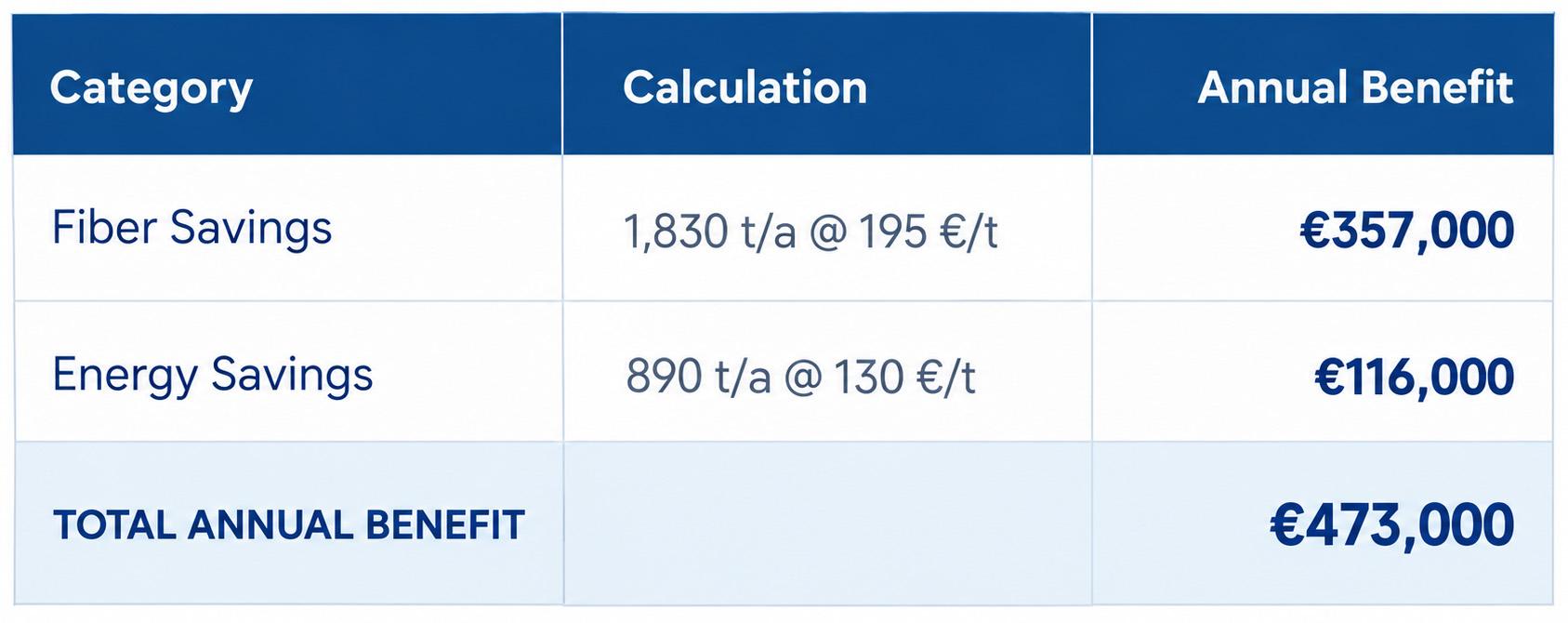
The resulting calculated ROI for the rebuild was less than six months.
Tasowheel’s combination of mechanical rebuilding, CD-control tuning and process know-how can restore CD basis-weight control and extend the useful life of an existing dilution system while creating measurable raw material and energy savings.
Case 2: Satia PM1 steambox retrofit in India
At PM1 in India, producing writing and printing paper, grades from 54 to 150 g/m². The objective was to improve drying capacity and reduce moisture variation.
The project used a Tasowheel steambox to improve the drying process and add CD moisture control, minimizing moisture variation in the end product through better control.
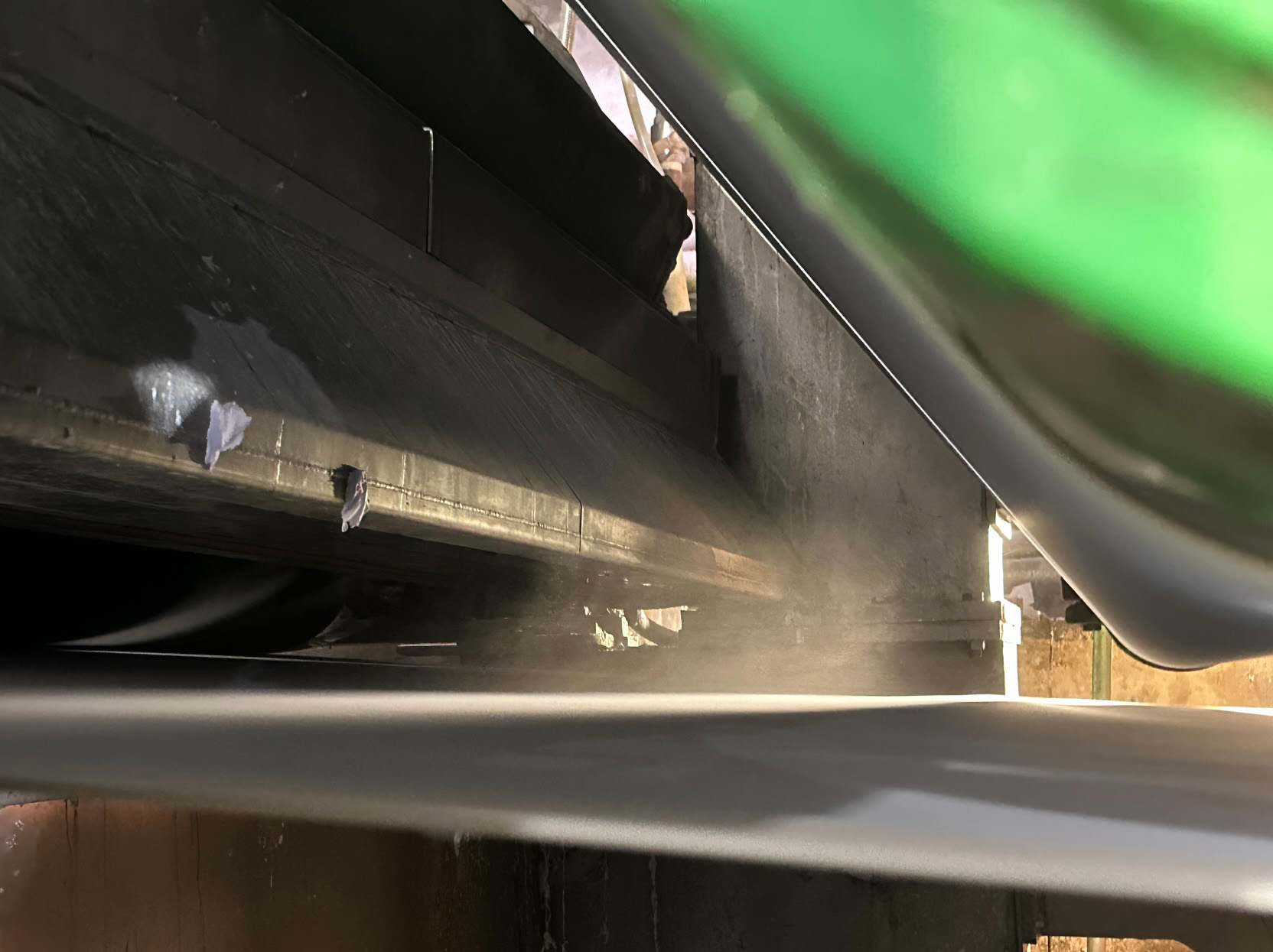
The existing conditions included a limited moisture control range and pressure to increase output without major downtime. This was our third consecutive steambox delivery to Satia, with a fourth awaiting startup.
The steambox provides additional drying capacity that can either be used to increase production or create room for energy savings. It also allows the process to operate at a more efficient point while minimizing moisture variation.
Process optimization and CD moisture control
Optimization started with the steam makeup process and tuning the CD control to improve the moisture profile and identify control gaps. We then adjusted the control strategy to minimize moisture profile variability and validated the improvement during steady-state operation.
The results showed two significant process improvements: moisture profile improvement of more than 70% and an increase of dry solids of more than 1.5%.
The Tasowheel steambox uses electromechanical actuators with absolute feedback, meaning that the actual steam dosing is known. The system provides 50 µm, or 0.4%, resolution for adjusting the steam valves.
In general, increasing sheet temperature by 10–14°C in the press section can improve sheet dryness by approximately 1%.
Using improved dryness for additional production
The improved dryness after the press can be used to increase production when the dryer section is limiting machine capacity.
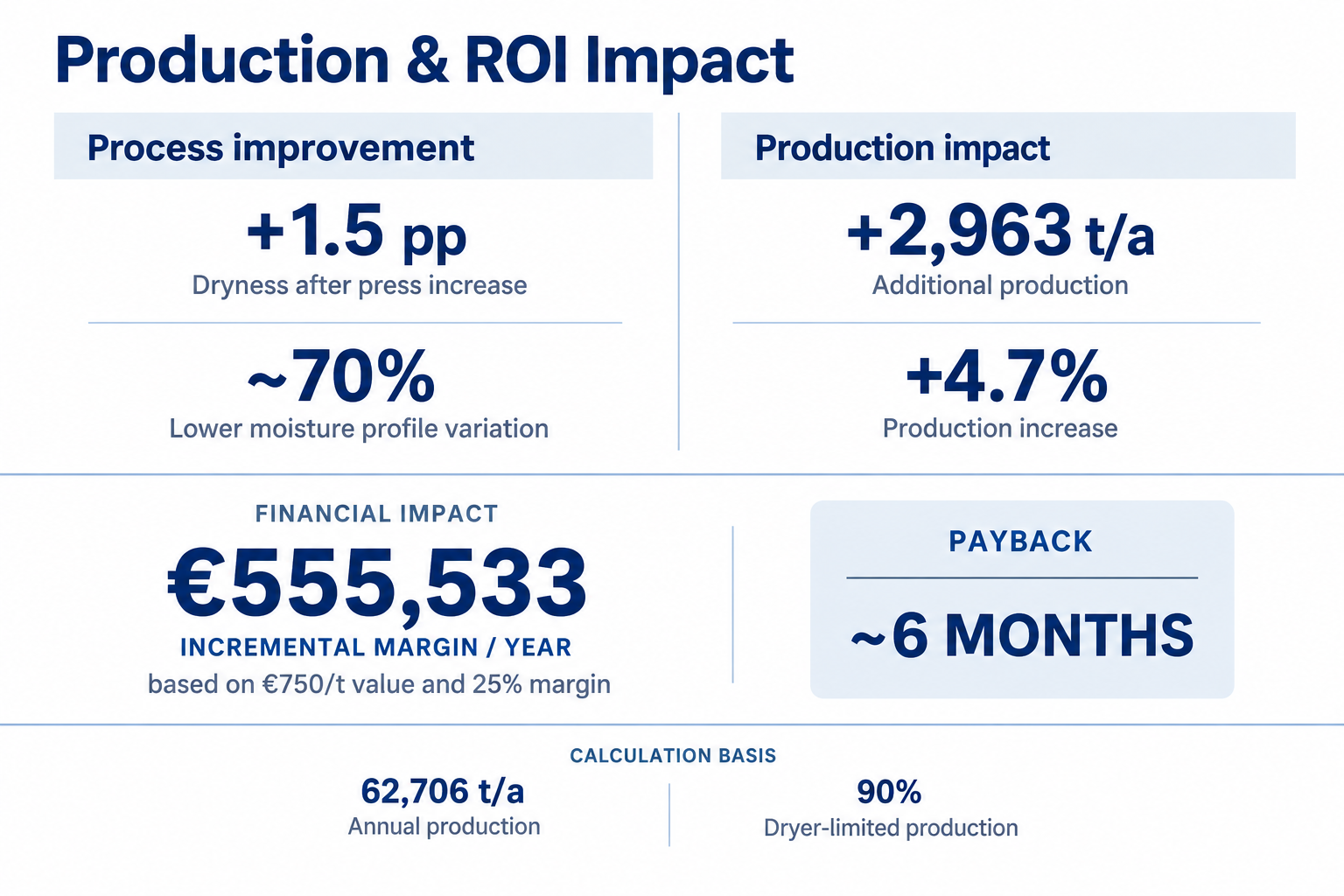
In the presented case, dryness after the press increased by 1.5 percentage points, while moisture profile variation was reduced by approximately 70%.
With annual production of 62,706 t/a and 90% dryer-limited production, the calculated production increase was 2,963 t/a, or approximately 4.7%.
Based on a value of €750/t and a 25% margin, the calculated incremental margin was €555,533 per year, resulting in a payback period of approximately six months.
Using improved dryness for energy savings
Alternatively, the mill can maintain production at the existing level and use the additional dryness to reduce steam consumption in the dryer section.
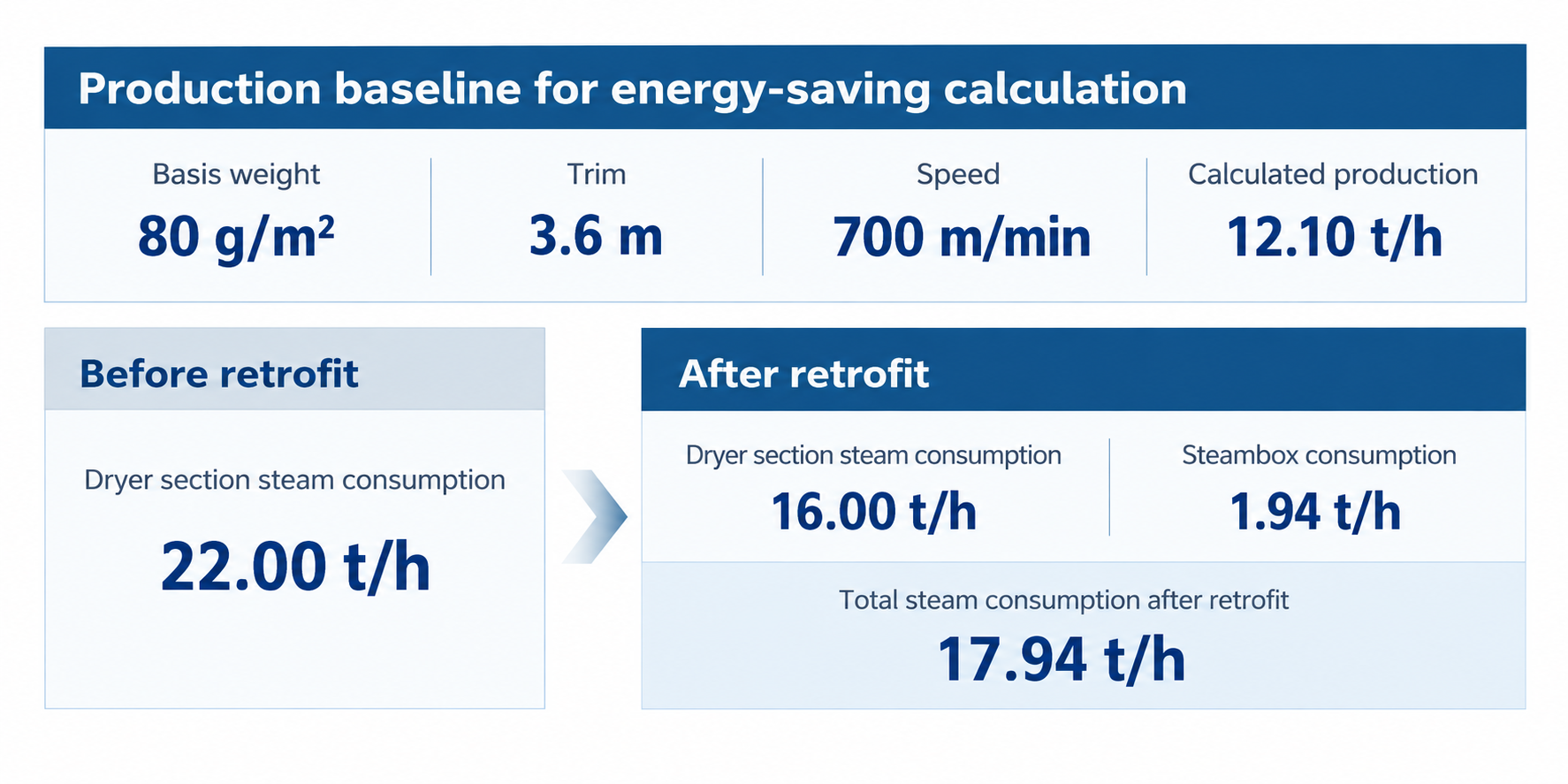
For the energy-saving calculation, the production baseline was 80 g/m², a trim of 3.6 m, a speed of 700 m/min and calculated production of 12.10 t/h.
Before the retrofit, dryer section steam consumption was 22.00 t/h. After the retrofit, dryer section consumption was 16.00 t/h, while the steambox itself consumed 1.94 t/h. This resulted in total steam consumption of 17.94 t/h and a net saving of 4.06 t/h.
At 8,000 operating hours per year, this represents approximately 32,500 tonnes of steam savings annually.
With an investment of €280,000, the calculated payback varies according to the steam price:
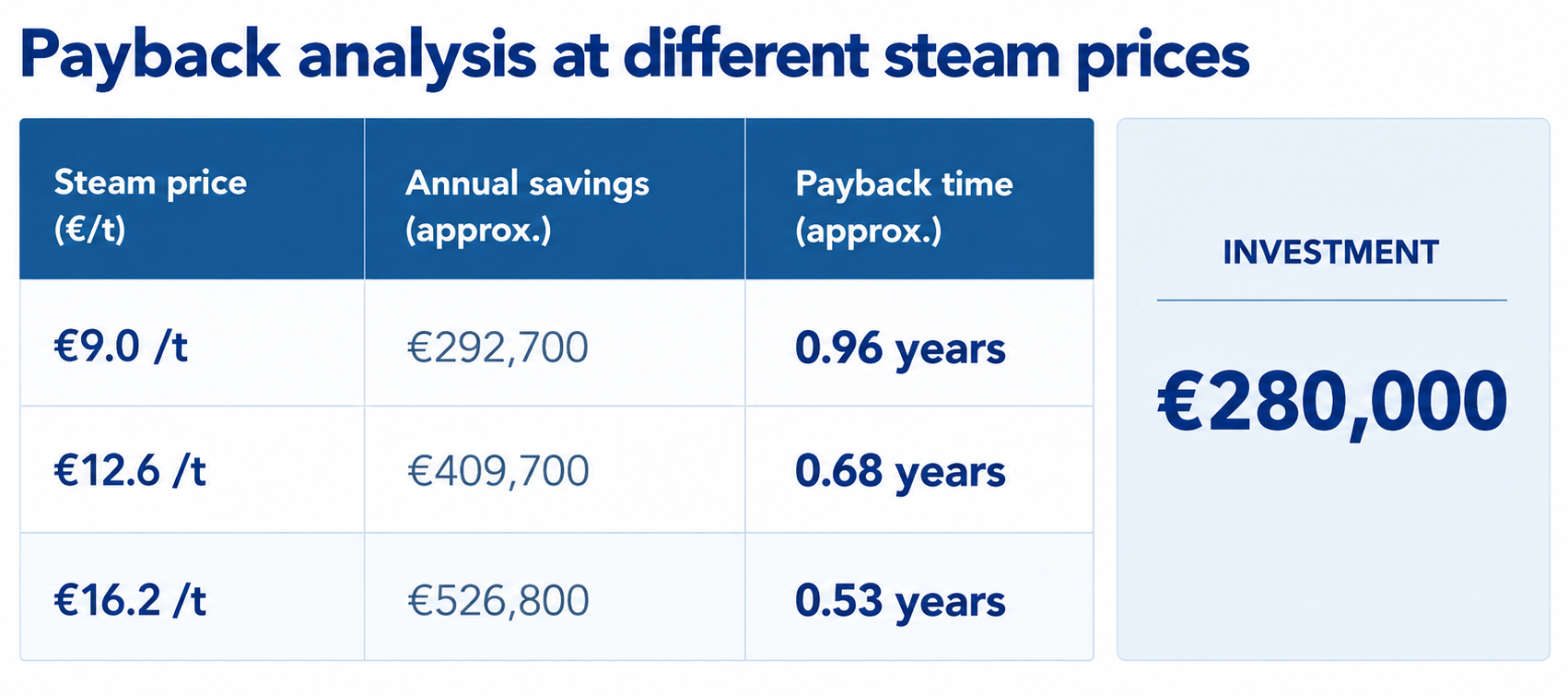
Across the presented steam-price scenarios, the calculated payback remains below one year.
The production and energy-saving scenarios represent two alternative ways of utilizing the same improvement in dryness. The full production uplift and full energy savings should not be counted simultaneously. The mill can use the additional drying capacity for more tonnes or lower energy consumption depending on its operating priorities.
Technical expertise protects the payback path
BM32 and Satia PM1 address different parts of the process, but both demonstrate the same principle. ROI is not determined by hardware alone.
At Tasowheel, our experience covers the complete chain from mechanical components and actuators to control tuning, process optimization and commissioning. Precise components provide the foundation, but they must work correctly with the controls and actual production process to deliver the expected performance.
A successful startup reduces the time between installation and stable production while reducing the risk of rework and extended commissioning.
Performance + reliability + know-how = secured ROI.
Quality execution reduces the risk of rework, stabilizes performance faster and helps protect the expected payback path.
Extending performance beyond the original QCS life cycle
The life cycle of a QCS does not have to end when individual components become worn, outdated or no longer meet current process requirements.
Tasowheel is helping its customers to run their processes more efficiently, with less resources and more automation. With our reliable QCS and profiling solutions our customers gain raw material and energy savings from production.